
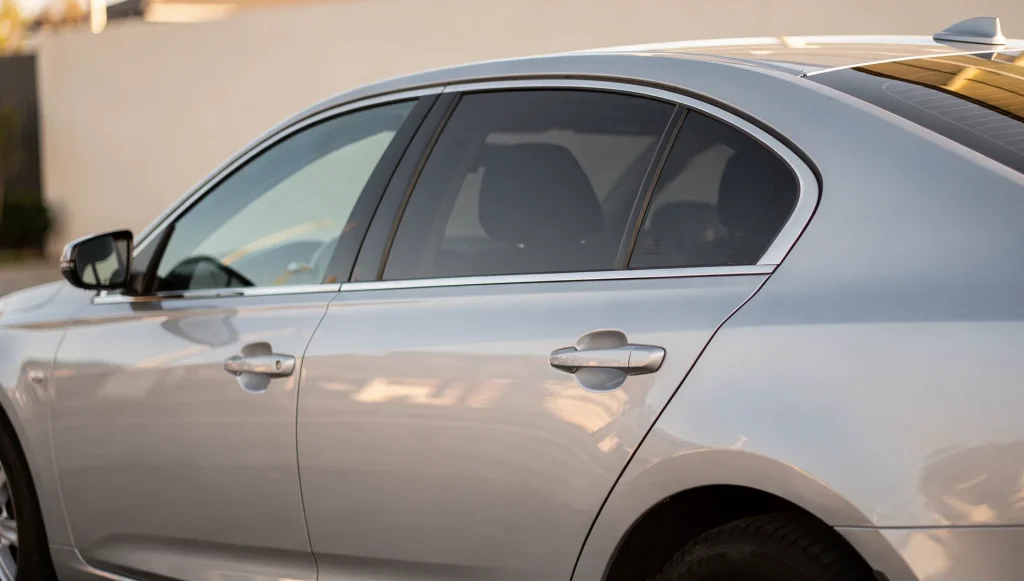
Here is the mix-up we see more than almost any other: a driver settles on a tint shade they like, then assumes it can go on every window of the car. It cannot. The legal tint darkness levels Western Australia drivers must work within are not uniform across a vehicle, and a mobile window tinting company dealing with WA cars every week watches this window-by-window distinction catch people out constantly. The front, side and rear glass are each treated differently, and understanding why saves a lot of frustration.
The short version is this: your car is not one window, it is a set of windows, and each position carries its own ceiling on how dark the glass can legally be.
Prefer to watch or listen?
Why Darkness Rules Differ by Window Position
The logic behind position-based rules comes down to visibility and safety. The windows a driver looks through to steer, check mirrors and monitor the road are held to stricter standards than windows that sit behind the driver.
Glass toward the front of the car affects what the driver can see and what others can see of the driver. Glass toward the rear is more about privacy and comfort for passengers and cargo. That difference in purpose is why the allowable darkness generally tightens as you move forward on the vehicle.
So when people ask “how dark can I go?”, the honest answer is always “which window?” The rest of this article breaks the car down position by position.
Front Side Windows: The Driver and Front Passenger
The front side windows, the ones beside the driver and front passenger, carry the strictest expectations for how much light must pass through. These are the windows you rely on for peripheral vision, lane changes and reversing, so they are treated as critical to safe driving.
Because of that role, the amount of darkness permitted here is more limited than anywhere else on the car. A film that looks perfectly acceptable on the rear of the vehicle may be too dark for these front positions. If you want a consistent look, it is usually the front side windows that set the limit on how dark the rest can comfortably go.
Rear Side Windows and the Rear Window
Move behind the driver and the picture changes. Rear side windows and the rear window are generally allowed to carry more privacy-oriented darkness than the front sides. The reasoning is straightforward: these windows are not part of the driver’s primary field of view in the same way.
This is where many drivers get the privacy and heat comfort they are after, since passengers in the back and items in the boot are the main concern rather than a clear line of sight for the driver. It is also why a vehicle can look darker from behind than from the front without any contradiction, the positions simply allow different treatment.
One practical note: if your car has darker film on the rear glass, keeping reversing cameras and mirrors in good working order matters more than ever for safe reversing at night.
The Windscreen and the Top Visor Strip
The windscreen sits in a category of its own. As the single most important window for forward vision, front glass is treated more cautiously than side or rear glass, and full-darkness film across the main viewing area is not the norm for everyday driving.
Many drivers are familiar with a tinted band across the very top of the windscreen, the visor strip that helps cut glare from the sun sitting low on the horizon. This strip is handled differently from the main body of the windscreen because it does not sit in the driver’s core line of sight. The key point is that the windscreen is not something you treat the same way you treat the back window, it has its own considerations.
How Factory Glass and Added Film Combine
Here is a detail that surprises people: the glass on many vehicles already carries a slight tint from the factory. That built-in shade affects how much light passes through before you add anything.
When you apply aftermarket film over factory-tinted glass, the two combine. The darkness you end up with is the result of both layers working together, not just the film on its own. So two identical films on two different cars can produce different final results depending on the glass underneath.
This is why assessing the existing glass before choosing a film matters. What is applied is only half the equation, the starting point of the glass is the other half. If you want to understand how the overall light transmission of a window is measured and why it drives compliance, that is covered in detail in our explainer on how visible light transmission relates to Perth compliance.
Getting It Right Across the Whole Vehicle
Thinking about tint position by position changes how you plan the job. Instead of asking for one shade everywhere, you work out what each window can carry and build the look from there.
- Front side windows set the tightest limit, so decide these first.
- Rear side windows and the rear glass usually allow more darkness for privacy and comfort.
- The windscreen is handled on its own terms, with the visor strip treated separately from the main glass.
- Factory glass tint affects your final result, so it needs to be factored in before film goes on.
Done this way, you get a vehicle that is comfortable, consistent to look at and compliant across every position, rather than one shade that works on some windows and causes problems on others.
Closing Thoughts for Perth Drivers
The practical decision in front of a Perth driver is not “which shade do I want?” but “what does each window allow?” Matching darkness to position, front, side and rear, is what keeps the whole car both compliant and genuinely comfortable to live with day to day.
Picture your car the way an installer does: a set of windows, each with its own legal ceiling. Plan from that point of view and you avoid the most common trap of all, choosing a single darkness and assuming it belongs everywhere.