
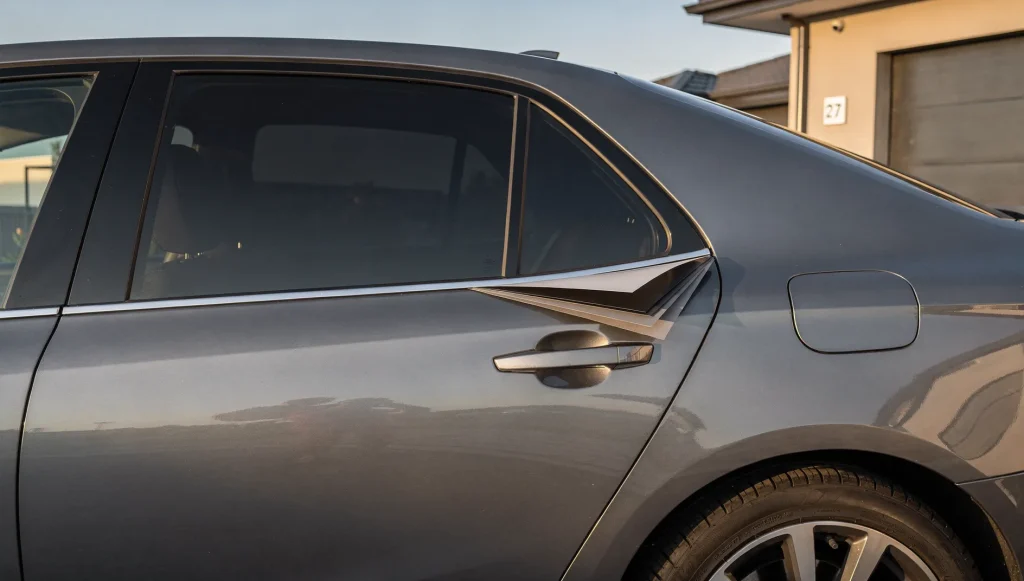
Most people booking tinting pick a shade they like and assume the job is done. Yet two films that look identical from the outside can perform worlds apart on heat, glare and signal. Having dyed, metallised, carbon and ceramic tint films explained in plain language helps you choose with confidence rather than guesswork. The team providing mobile window tinting in Perth, WA works with each of these film types to suit our harsh local sun, and this walkthrough keeps the jargon out of it.
Think of film type as the engine under the paint. The colour is cosmetic. What really matters is the material and how it manages the sun striking your glass each day.
Dyed Film Explained
Dyed film is the most basic option. It uses a layer of dye that absorbs light passing through the glass, which cuts glare and darkens the view from outside for added privacy.
It delivers a flat, non-reflective look many people like, and it does a reasonable job of softening harsh daylight. The trade-offs sit in performance. Because dyed film absorbs rather than reflects, its heat rejection is modest compared with higher grades. The dye can also fade over time, especially under constant WA sun, shifting towards a purplish tone and losing some of its original effect.
Metallised Film Explained
Metallised film takes a different approach. Tiny metallic particles embedded in the film reflect heat away from the glass rather than soaking it up. This gives stronger heat rejection than dyed film and better durability, since metal resists fading far better than dye.
There are two catches. The particles create a mirror-like sheen some owners find too reflective. More importantly, that metal layer can interfere with signals, so phone reception, GPS and radio may weaken behind it. If uninterrupted connectivity matters to you, this is worth weighing up.
Carbon Film Explained
Carbon film sits comfortably in the middle. It is non-metallic, so it avoids the signal interference that affects metallised film, and it carries a deep matte finish without the mirror sheen.
Performance is solid across the board. Carbon blocks a good share of heat, screens out most UV, and helps protect interiors from fading. Because the colour comes from carbon particles rather than dye, it holds its appearance over the years instead of discolouring. For many drivers and homeowners it strikes a sensible balance of looks, comfort and longevity.
Ceramic Film Explained
Ceramic film is the most advanced of the four. It uses ceramic particles that block a large portion of infrared heat and UV while staying non-reflective and completely signal-friendly, so your devices work normally behind it.
What sets ceramic apart is that it can reject significant heat without needing to be dark. That matters in Western Australia, where the sun is relentless and infrared heat is the main source of cabin and room discomfort. Ceramic also resists fading well, keeping its clarity and colour over a long service life.
Heat, Glare, UV and Longevity Side by Side
Comparing the four films on the things that actually affect your day helps the differences click into place.
- Heat rejection: ceramic leads, followed by metallised and carbon, with dyed film the most modest.
- Glare control: all four reduce glare, with the effect tied more to shade than to material.
- UV and interior fade protection: carbon and ceramic offer strong, lasting protection; dyed film protects less as it ages.
- Appearance: dyed and carbon give a flat matte look, metallised a reflective sheen, and ceramic a clean non-reflective finish.
- Signal interference: only metallised film risks disrupting phone, GPS and radio.
- Longevity: carbon and ceramic generally hold up best over years of sun, with dyed film the quickest to fade.
Matching Film Type to How You Use It
The right film depends on where it goes and what you need from it.
- Cars: drivers who rely on connected devices usually avoid metallised film, leaning towards carbon or ceramic for heat comfort without signal loss.
- Homes: living areas benefit from strong infrared and UV blocking to keep rooms cool and protect furnishings, which suits carbon and ceramic.
- Offices: glare on screens and all-day heat load make non-reflective, high-performing films a practical choice for comfort and productivity.
Whatever you pick, vehicle tint must stay within the legal darkness limits that apply in WA. A reputable installer will steer you toward a shade that keeps you compliant while still delivering the comfort you are after. If you are weighing up who should handle the job, it pays to read up on choosing a mobile tinting installer in Perth before you commit.
Here is the part worth remembering. Even premium ceramic film underperforms if it is applied poorly, with bubbles, gaps or lifting edges undoing everything you paid for. Once you have settled on the film, your attention should turn to the quality of the workmanship and what a clean, professional tint finish looks like compared with a rushed one.